Day 7: the power supply came with four manuals, and none of them agreed
Today the goal was simple: build the power supply. Everything for it had finally shown up, and my hands had been itching to see what all those AliExpress boxes actually turn into.
The kit itself is straightforward on paper — a Riden RD6012PW control panel, its S800 transformer, a case to put both of them in, and a pile of wires to connect it all. I even grabbed a couple of silicone feet, hoping for a supply that sits still on the desk and, ideally, doesn’t hum. Inside the box: a QR code pointing at the assembly instructions. I scanned it first, obviously. And obviously, the header on that PDF named my exact model, while every illustration inside it showed something else entirely — different connector layout on the transformer, different board arrangement on the panel. Off to a great start.
Fine. When you want to see how something goes together, you go to YouTube — so I did, and found an unboxing-and-assembly video for what was supposedly my exact model. Except the unit on screen didn’t match the PDF, and neither of them matched what was actually sitting on my desk. Two sources. Two different devices. Mine, apparently, a third. Still armed with nothing but stubbornness and Google, I went and found an actual user manual too — version 4, a fourth document that agreed with precisely none of the other three.
At that point there was only one conclusion available: this nation is unstoppable. A country that ships this much hardware, this fast, while apparently unable to agree with itself on what one specific product even looks like — either they’re operating on a technological level the rest of us haven’t caught up to yet, or they’ve quietly invented a form of Agile the rest of the industry hasn’t heard about. Either way, arguing about it wasn’t going to assemble a power supply, and I had actual wires in my actual hands. This was what I had. This was what I had to work with.
What actually saved the day wasn’t any of the four documents — it was the transformer itself, which turned out to have its own contact markings stamped right on the board. Lined up against the tangle of half-matching instructions and video footage, the picture finally resolved into something coherent, and for one brief, suspicious moment, I trusted it.
Wires connected. Power cable in. Flip the switch on the back and — nothing. No spark, no smoke, no small electrical fire to write home about. I’m calling that a success, because at this stage of a project, “did not catch fire” is genuinely most of the bar.
One step left before closing the case and wiring in the control panel: dial the transformer’s own raw output up to around 68V, watched live on a multimeter clipped across the leads. Naturally, there was no actual screwdriver anywhere near the trim pot that needed turning, so I used the only vaguely screw-shaped object within reach and hoped Riden’s engineers hadn’t been quite as picky about tolerances as their documentation team had been careless about consistency. The reading crept up exactly the way it was supposed to — which was, frankly, more reassurance than today had any right to give me.
Everything off. Power cable out, for safety. Control panel connected, case closed. One more test run — the real one, this time.
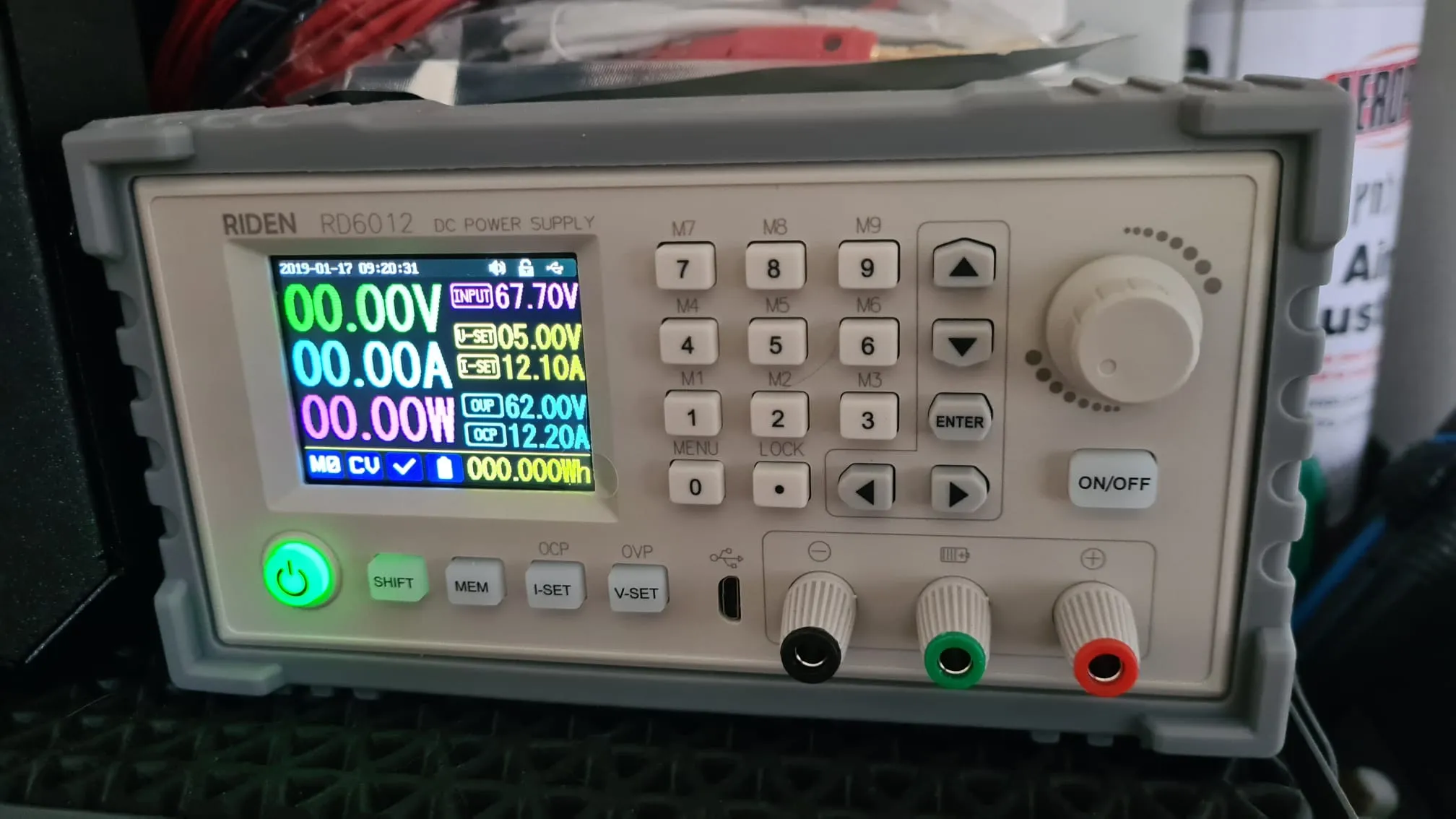
It worked!!